
Walk into any gym, and you’ll probably hear someone talking about creatine. For years, it was considered a supplement reserved for bodybuilders, powerlifters, and elite athletes chasing bigger muscles and heavier lifts.
Today, that thinking is outdated.
In fact, if you’re over 50, creatine may have far more to offer you than it does a 25-year-old.
The goal after 50 isn’t to bench press 300 pounds. It’s to stay strong enough to carry groceries without struggling, get up from the floor without assistance, climb stairs with confidence, play with your grandchildren, and remain independent for decades to come.
That’s where creatine shines.
After reviewing the latest research, including a comprehensive independent analysis by ConsumerLab, I believe creatine deserves serious consideration for almost every healthy adult over 50 who participates in resistance training.
Let’s look at why.
Why Muscle Matters More Than Ever After 50
Starting around age 30, we naturally begin losing muscle mass. By the time we reach our 50s and 60s, that decline accelerates. This age-related loss of muscle, known as sarcopenia, is one of the biggest contributors to falls, frailty, reduced mobility, and loss of independence.
Less muscle doesn’t just mean you’re weaker.
It means:
- Getting out of a chair becomes harder.
- Carrying groceries feels heavier.
- Recovering from illness takes longer.
- Balance declines.
- Your metabolism slows.
- Everyday activities require more effort.
The good news?
Resistance training is still the most powerful tool we have to slow or even reverse much of this decline.
Creatine simply helps you get more out of that training.
What Exactly Is Creatine?
Creatine is a naturally occurring compound made from amino acids. Your body produces it in the liver and kidneys, and about 95% of it is stored in your muscles. You also get small amounts from foods like beef, poultry, pork, and fish.
Think of creatine as your muscles’ “quick-charge battery.”
Whenever you perform a short burst of activity—standing up quickly, climbing stairs, lifting weights, or preventing yourself from falling—your muscles rely heavily on stored creatine to produce energy rapidly.
The more creatine stored in your muscles, the greater your ability to perform these demanding movements.
It’s One of the Most Studied Supplements Ever
One reason I recommend creatine with confidence is simple: Very few supplements have been studied as extensively. Over several decades, researchers have examined creatine’s effects on athletes, older adults, individuals recovering from injuries, and people living with various medical conditions. While not every study shows dramatic improvements, the overall body of evidence is remarkably consistent:
Creatine works.
The biggest benefits occur when it’s combined with resistance training.
The Biggest Benefit: More Strength
Strength is the foundation of healthy aging. When you’re stronger, everything else becomes easier. Research has repeatedly shown that creatine can help improve strength during high-intensity exercise such as weight training. It doesn’t replace exercise, it enhances the body’s ability to perform repeated, demanding efforts.
Why does that matter?
Imagine you’re doing leg presses. Without creatine, maybe you complete ten good repetitions. With creatine, perhaps you manage eleven or twelve. Those extra repetitions may seem insignificant on one workout. Multiply that over months of training, and you’ve completed hundreds of additional quality repetitions. That’s where real progress happens.
More Muscle Means More Independence
Muscle isn’t just for athletes. It’s your insurance policy against aging. Several studies have found that adults taking creatine while following a resistance-training program gained more lean muscle than those exercising without it.
That’s important because muscle influences nearly every aspect of healthy aging:
- Better balance
- Improved mobility
- Faster walking speed
- Greater ability to recover after illness
- Improved insulin sensitivity
- Higher resting metabolism
At CoreFit, we often remind clients: Muscle is your retirement account for independence.
The more you invest today, the more you’ll have available later.
What Does the Research Say About Adults Over 50?
This is where things get interesting. Unlike flashy supplement advertisements that promise miracles, the ConsumerLab review takes a balanced look at the evidence. Some studies show meaningful improvements. Others show modest improvements. A few show little additional benefit. Overall, the conclusion is encouraging.
For example, one three-month study involving adults over 65 found that participants taking 5 grams of creatine daily while performing resistance training experienced greater increases in lean body mass and muscle strength than those performing the same training without creatine. Another study involving men averaging 58 years of age found significantly greater improvements in leg strength and total lower-body strength among those taking creatine alongside resistance training. Not every study has found additional benefits, however. Some longer-term trials reported similar improvements in both the creatine and placebo groups, likely because resistance training itself is such a powerful intervention.
Here’s the key takeaway: Resistance training remains the star of the show. Creatine helps some people get even more out of it. That’s a realistic expectation and a very worthwhile one.
Does Creatine Help Your Brain?
This is one area where social media has gotten ahead of the science. You’ve probably seen claims that creatine dramatically improves memory, concentration, or prevents dementia. Sadly, the current evidence doesn’t support those claims.
ConsumerLab reviewed numerous studies examining cognition and found that while creatine plays an important role in brain energy metabolism, improvements in memory and cognitive performance among older adults have generally been small, inconsistent, or absent.
That’s not disappointing.
It’s simply honest science.
Could future research uncover additional benefits?
Absolutely.
But right now, I recommend creatine for stronger muscles, not sharper crossword puzzle skills.
What About Bone Health?
Another common misconception is that creatine strengthens bones. Unfortunately, the research doesn’t support that conclusion. Studies examining bone density have found little to no additional benefit from creatine alone, even when combined with resistance exercise. The real benefit may be indirect. Stronger muscles improve balance -> Better balance reduces falls -> Fewer falls mean fewer fractures.
Sometimes the greatest benefit isn’t making bones stronger, it’s preventing the accident in the first place.
Which Creatine Should You Buy?
Here’s some good news. Unlike many supplements, where you often get what you pay for, creatine isn’t one of them.
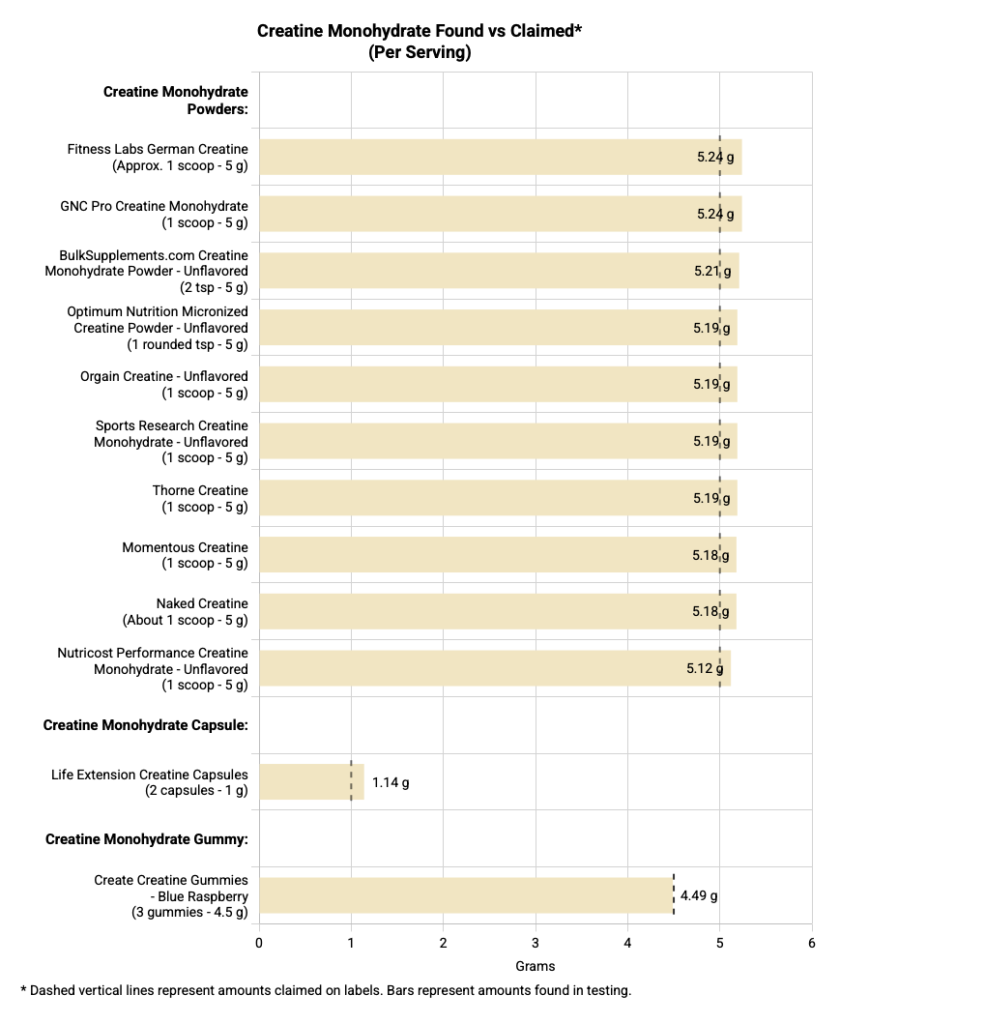
ConsumerLab tested 12 popular creatine products for label accuracy and purity. Eleven met their quality standards. Only one product failed—and it wasn’t because it contained too little creatine. It failed because it contained an excessive amount of creatinine, a breakdown product that forms when creatine degrades. ConsumerLab’s acceptable limit is no more than 0.1% creatinine, while the gummy product tested contained 4.7%.
Even more surprising?
The least expensive product was also ConsumerLab’s Top Pick.
ConsumerLab’s Best Creatine Values
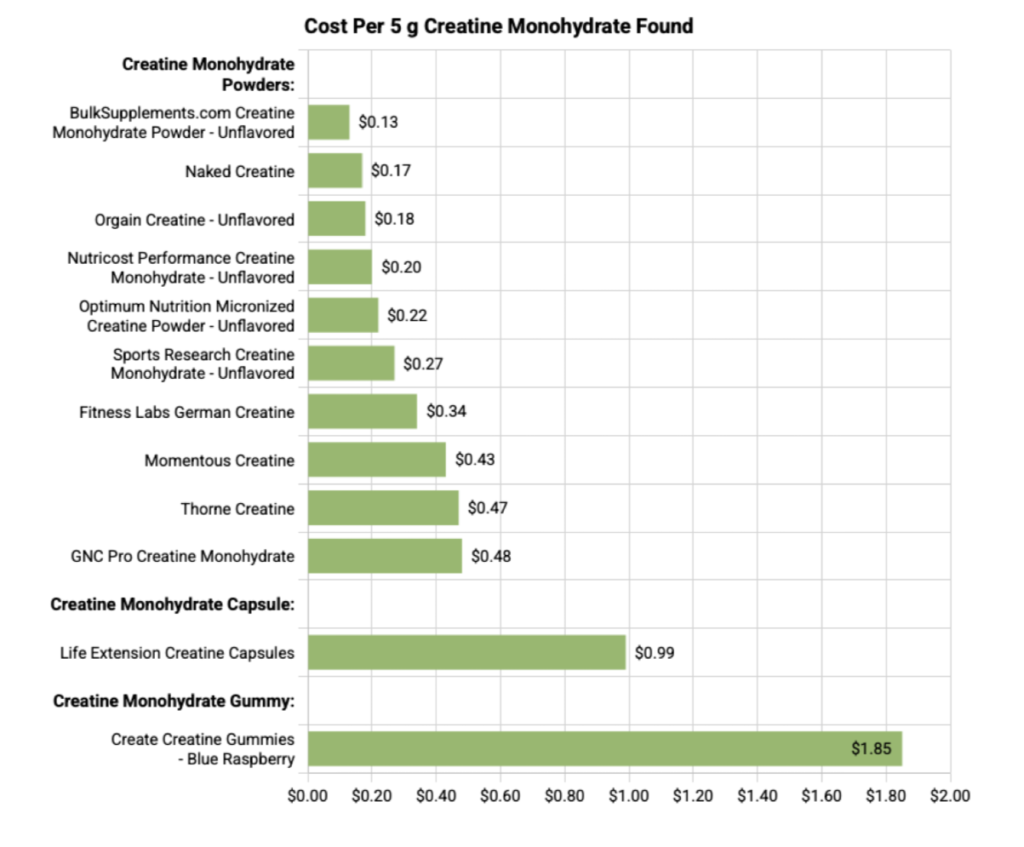
Prices reflect ConsumerLab’s testing at the time of publication and may change over time.
The lesson here is simple.
Don’t assume the most expensive product is the best.
In fact, several high-quality powders cost less than 20 cents per serving, while the most expensive product tested, the gummies, was also the only one that failed ConsumerLab’s quality standards.
Don’t Fall for Fancy Marketing
The supplement industry loves creating new versions of old products.
Buffered creatine.
Liquid creatine.
Magnesium creatine.
Creatine HCl.
Creatine nitrate.
Creatine ester.
It sounds impressive.
Unfortunately, the research doesn’t support paying extra for most of these.
ConsumerLab notes that creatine monohydrate provides the greatest amount of usable creatine compared with many alternative forms and remains the form used in the vast majority of research studies. They also found no significant advantage for powders marketed as “micronized” or branded as Creapure® over other high-quality creatine monohydrate powders they tested.
As a trainer, I love simple. One ingredient. One scoop. No proprietary blends. No marketing hype. Just creatine monohydrate.
Powder or Capsules?
Some clients ask me this question. My answer? Go with the powder.
ConsumerLab found powders were not only dramatically less expensive, but they also provided a full 5-gram serving with excellent purity. Capsules worked well, but you’d need to swallow about ten capsules to get a typical 5-gram daily dose—and you’d pay roughly seven times more than you would for the top-rated powder.
Unless you absolutely dislike powders, they’re the better value. As a bonus, you can buy flavored powder creatine. Mix it with your water and you are killing two birds with one stone: getting hydrated and giving your body 5 grams of creatine.
Do You Need a Loading Phase?
For years, the standard recommendation has been to “load” creatine by taking 15 to 20 grams per day for five to seven days before dropping to a maintenance dose.
Does it work? Yes. Is it necessary? Probably not.
ConsumerLab points out that while loading saturates muscles more quickly, studies have also shown benefits from simply taking 5 grams daily without any loading phase. For most of my clients over 50, I recommend skipping the loading phase.
Why?
Because consistency beats speed.
Taking one scoop every day is easier to remember, easier on the stomach, and gets you to the same destination—it just takes a little longer.
A Tip That Most People Don’t Know
Here’s something I learned from the ConsumerLab review that even surprised me. Creatine doesn’t dissolve well in cold water. That’s why you often see a layer of white powder sitting at the bottom of your shaker bottle. ConsumerLab recommends mixing creatine into very warm water (around 125°F/50°C). It dissolves completely, creating a clear, tasteless liquid that may improve absorption. Personally, I’d mix it with warm water first, then pour it over ice if you prefer a cold drink.
Is Creatine Safe?
This is probably the biggest concern I hear. “Coach Guy, isn’t creatine hard on your kidneys?” For healthy adults, the evidence says no. ConsumerLab reviewed long-term studies in which creatine was taken safely for periods ranging from several weeks to as long as five years. Concerns about kidney damage have largely come from isolated case reports or misunderstandings involving blood creatinine levels, which can increase slightly with supplementation without indicating kidney injury.
That said, there are a few important considerations.
Some regulatory agencies recommend limiting long-term intake to around 3 grams per day, noting that this level aligns with normal creatine turnover in the body and has the strongest long-term safety data. ConsumerLab also notes that evidence for prolonged high-dose loading protocols is less certain.
If you have kidney disease, significant liver disease, or another chronic medical condition—or if you’re taking medications that affect kidney function—talk with your physician before starting creatine.
Don’t Forget the Water
Creatine draws water into muscle cells. That’s one of the ways it helps support training performance. ConsumerLab recommends drinking about 8 cups (64 ounces) of plain water daily, in addition to the fluids you get from other beverages and foods. For active adults over 50, especially during the summer or after a workout, you’ll often need more than that. Good hydration helps your body perform at its best, whether you’re taking creatine or not.
My Recommendation
If you’re over 50, here’s what I’d suggest:
- Strength train at least two or three times per week.
- Aim for adequate daily protein intake.
- Consider taking 3 to 5 grams of creatine monohydrate each day.
- Choose a product that has been independently tested for quality.
- Be consistent. Creatine isn’t a stimulant—you won’t “feel” it working overnight. Its benefits come from building up muscle stores over time.
The CoreFit Bottom Line
When I first started in this industry nearly two decades ago, creatine was viewed as a supplement for bodybuilders. Today, the science tells a very different story. For adults over 50, creatine isn’t about chasing bigger biceps or lifting the heaviest weights in the gym.
It’s about preserving the strength to live independently.
It’s about getting up off the floor with confidence.
It’s about carrying your grandchildren without your back giving out.
It’s about staying active long enough to enjoy retirement instead of simply surviving it.
No supplement can replace regular exercise, quality sleep, a balanced diet, or a healthy lifestyle.
But when you combine progressive strength training, adequate protein, and daily creatine monohydrate, you’re giving your body some of the best tools modern research has identified for maintaining muscle as you age.
At CoreFit, we believe growing older is inevitable but growing weaker doesn’t have to be.
Train consistently. Eat well. Stay curious about the science. And make choices today that your 70-year-old self will thank you for tomorrow.