Your home can be one of the most effective, comfortable, and sustainable places to begin your fitness journey.
There’s something empowering about deciding to take control of your health—especially when you realize you don’t need a gym membership, fancy equipment, or even a lot of space to do it.
For many people, especially as we get older, the idea of starting (or restarting) an exercise routine can feel overwhelming. Where do you begin? What should you do? How do you avoid injury? And maybe most importantly—how do you stay consistent?
The good news is that getting started at home can simplify all of that. No commute, no crowds, no intimidation—just you, your pace, and a routine that fits your life.
Let’s walk through how to do it properly, so you can build something that lasts.
Start With Your “Why”
Before you do a single squat or stretch, take a moment to think about why this matters to you.
Maybe you want more energy throughout the day. Maybe you want to keep up with your kids or grandkids. Maybe it’s about improving balance, reducing pain, or simply feeling stronger and more confident in your body.
Your reason doesn’t have to be complicated, but it does need to be personal.
Because on the days when motivation is low—and those days will come—your “why” is what keeps you showing up.
A simple tip: write it down and keep it somewhere visible. It’s a small step that makes a big difference.
Keep It Simple (Especially at the Beginning)
One of the biggest mistakes people make when starting at home is trying to do too much, too soon.
You don’t need hour-long workouts. You don’t need complex routines. And you definitely don’t need to feel exhausted after every session.
In fact, the goal at the beginning isn’t intensity—it’s consistency.
Start with 20 to 30 minutes, three times per week. That’s it.
As your body adapts and your confidence grows, you can build from there. But in the early stages, success comes from showing up regularly, not from pushing to your limits.
Create a Space That Works for You
You don’t need a full home gym to get a great workout.
A small, clear area in your living room, basement, or bedroom is more than enough. What matters is that the space is safe, comfortable, and free from distractions.
Think of it as your “movement zone.” When you step into that space, your focus shifts to taking care of yourself.
If possible, keep a few basics nearby—a mat, a pair of dumbbells, or resistance bands. Even just having those items visible can act as a reminder and make it easier to get started.
Use Your Body First, Equipment Second
There’s a common misconception that you need equipment to get results. You don’t.
Your body weight is one of the most effective tools you have.
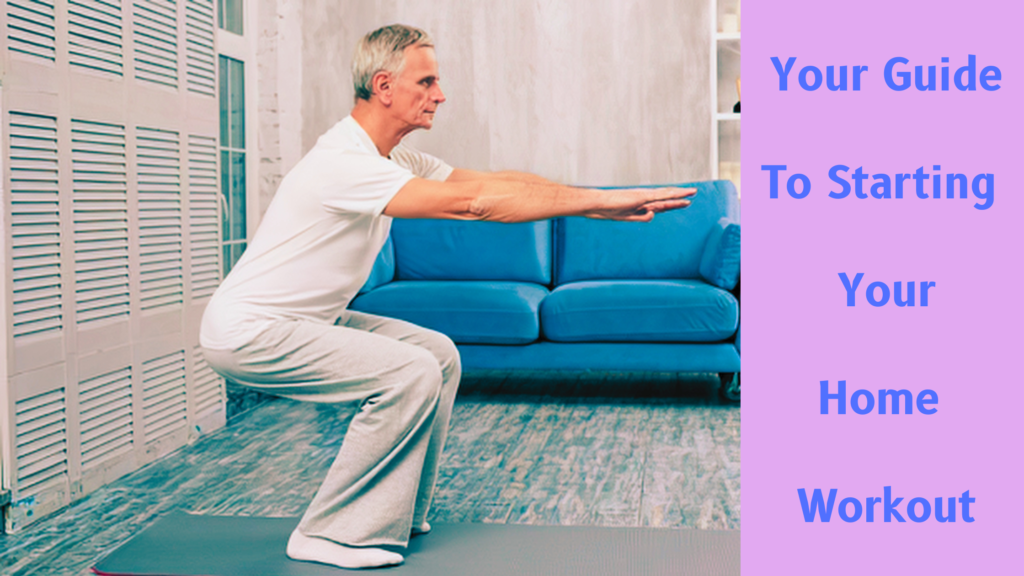
Exercises like squats, wall push-ups, step-ups, and gentle core work can build strength, improve balance, and increase mobility—all without any equipment at all.
That said, a few simple additions can help add variety over time:
- Resistance bands
- Light dumbbells
- A sturdy chair or bench
These are affordable, don’t take up much space, and can support your progress as you get stronger.
Pro Tip: Look on Facebook Marketplace or Kijiji for used fitness equipment.
Focus on the Right Types of Movement
A well-rounded routine doesn’t need to be complicated, but it should include a mix of key elements:
Strength training helps maintain muscle and bone health, which becomes increasingly important as we age.
Cardio supports heart health and boosts energy levels. This can be as simple as marching in place, stepping side to side, or going for a brisk walk.
Mobility and flexibility keep your joints moving well and help reduce stiffness and discomfort.
Balance work is especially important for preventing falls and maintaining independence.
You don’t have to separate these into different workouts. A simple full-body session that touches on each area is more than enough to get started.
Follow a Beginner-Friendly Plan
If you’re unsure where to begin, following a simple structure can take away the guesswork.
Here’s an example of what a week might look like:
Day 1: Full-body strength (20–30 minutes
Day 2: Light cardio + mobility
Day 3: Rest or gentle stretching
Day 4: Full-body strength
Day 5: Cardio + balance work
Day 6: Active recovery (walking, stretching)
Day 7: Rest
This kind of structure gives your body time to recover while still building momentum.
Build Consistency, Not Perfection
This is the part that matters most.
You will not feel amazing every workout. Some days will feel harder than others. Some days you won’t feel like doing anything at all.
That’s normal.
What matters is that you keep showing up—even if it’s just for 10 or 15 minutes.
Consistency builds momentum. And momentum is what leads to real, lasting results.
A shorter workout you actually do will always be more effective than the perfect workout you skip.
Refer to our blog about the ABC Framework to help you schedule your training and stay consistent. Click here for the article.
Track Progress (Beyond the Scale)
Progress isn’t just about weight loss.
In fact, some of the most meaningful changes have nothing to do with the scale at all.
Pay attention to things like:
- Feeling stronger during daily activities
- Moving with less stiffness or discomfort
- Improved balance and stability
- Better energy throughout the day
- Improved mood and confidence
You can also track your workouts, take occasional photos, or simply make note of how you feel after each session.
These small wins add up—and they’re incredibly motivating.
Don’t Forget Recovery
Exercise is only one piece of the puzzle.
Your body needs time to recover and rebuild. That means getting enough sleep, staying hydrated, and fueling your body with nutritious foods.
Recovery isn’t a break from progress—it’s part of the process.
Final Thoughts
Starting a home workout routine doesn’t require perfection, and it doesn’t require drastic changes.
It starts with a decision.
A decision to move a little more. To take care of your body. To invest in your long-term health.
At Corefit, we’ve seen firsthand how powerful small, consistent steps can be, especially for adults over 50. Strength, balance, and confidence can all be improved at any age, and it often starts right at home.
So keep it simple. Start where you are. And most importantly—keep going.
Your future self will thank you for it.